This year's Nobel Prize in Physics has been awarded to Prof. Francis Halzen of the University of Wisconsin–Madison for his pioneering contribution to the development of the IceCube Neutrino Observatory and the discovery of high-energy neutrinos of astrophysical origin. The subject of the prize-winning research is closely related to work carried out at the Janusz Gil Institute of Astronomy, University of Zielona Góra. Dr Gopal Bhatta, who works in high-energy astrophysics, has collaborated scientifically with the laureate.
Neutrinos are elementary particles that interact with matter extremely weakly. This allows them to travel vast cosmic distances almost undisturbed by the matter they encounter. At the same time, detecting them is a formidable experimental challenge.
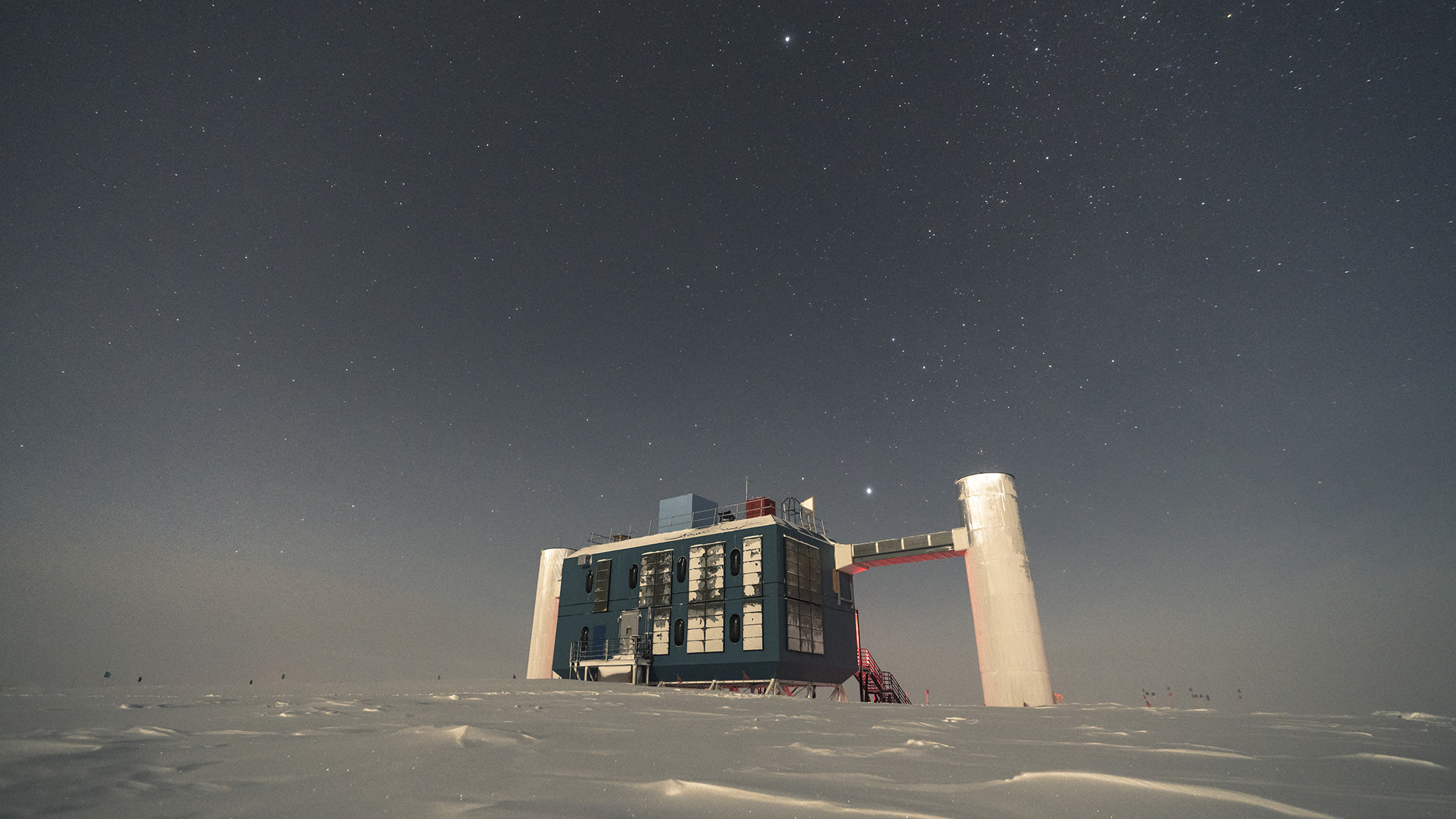
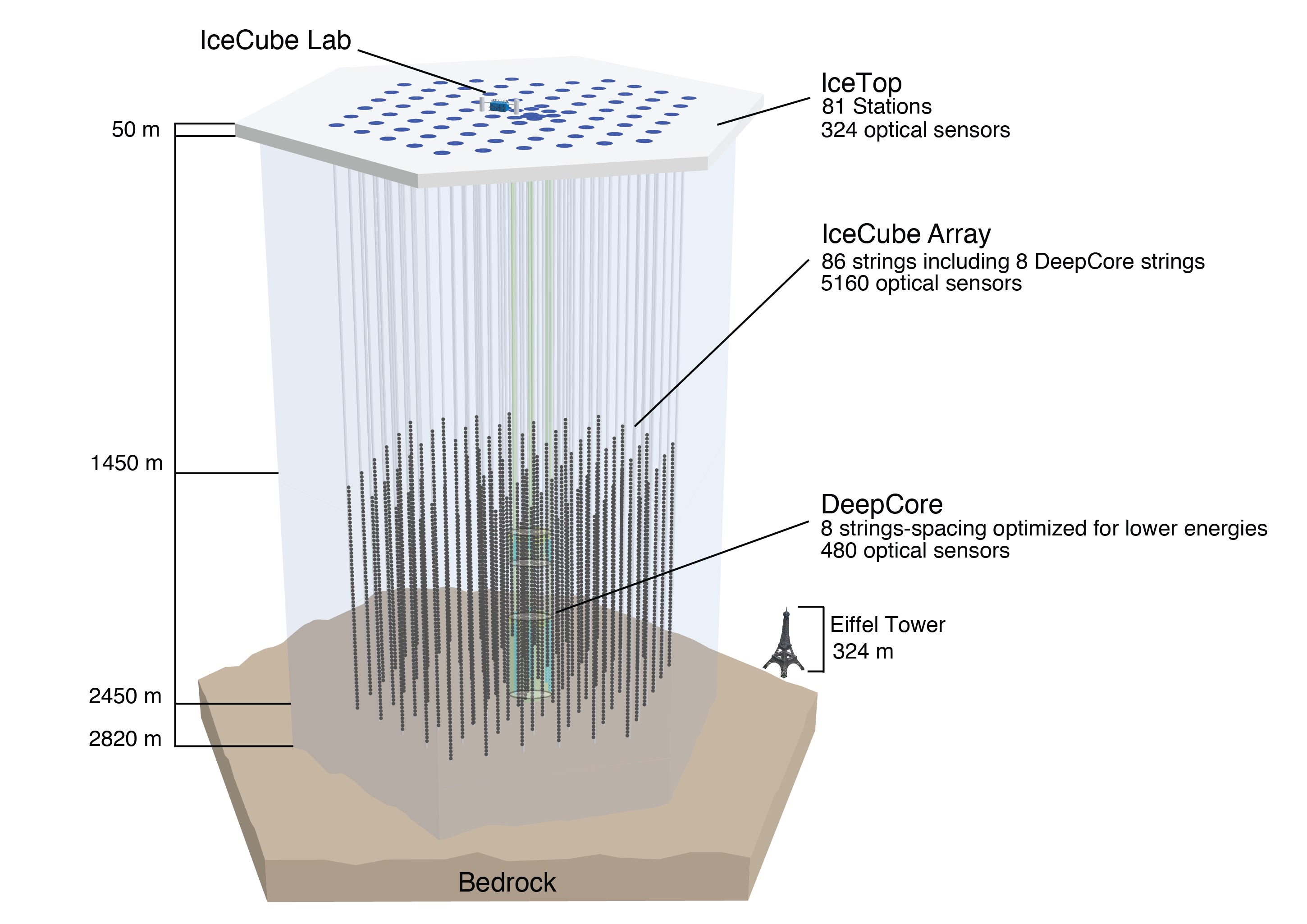
A breakthrough in neutrino astronomy came with the construction of the IceCube observatory at the South Pole. The detector uses about a cubic kilometre of Antarctic ice, in which thousands of sensors have been deployed to record the light produced when neutrinos interact with matter.
IceCube has made it possible to study high-energy neutrinos reaching Earth from distant regions of the Universe. They carry information about extreme astrophysical processes in which particles are accelerated to energies far exceeding those achieved in terrestrial accelerators.
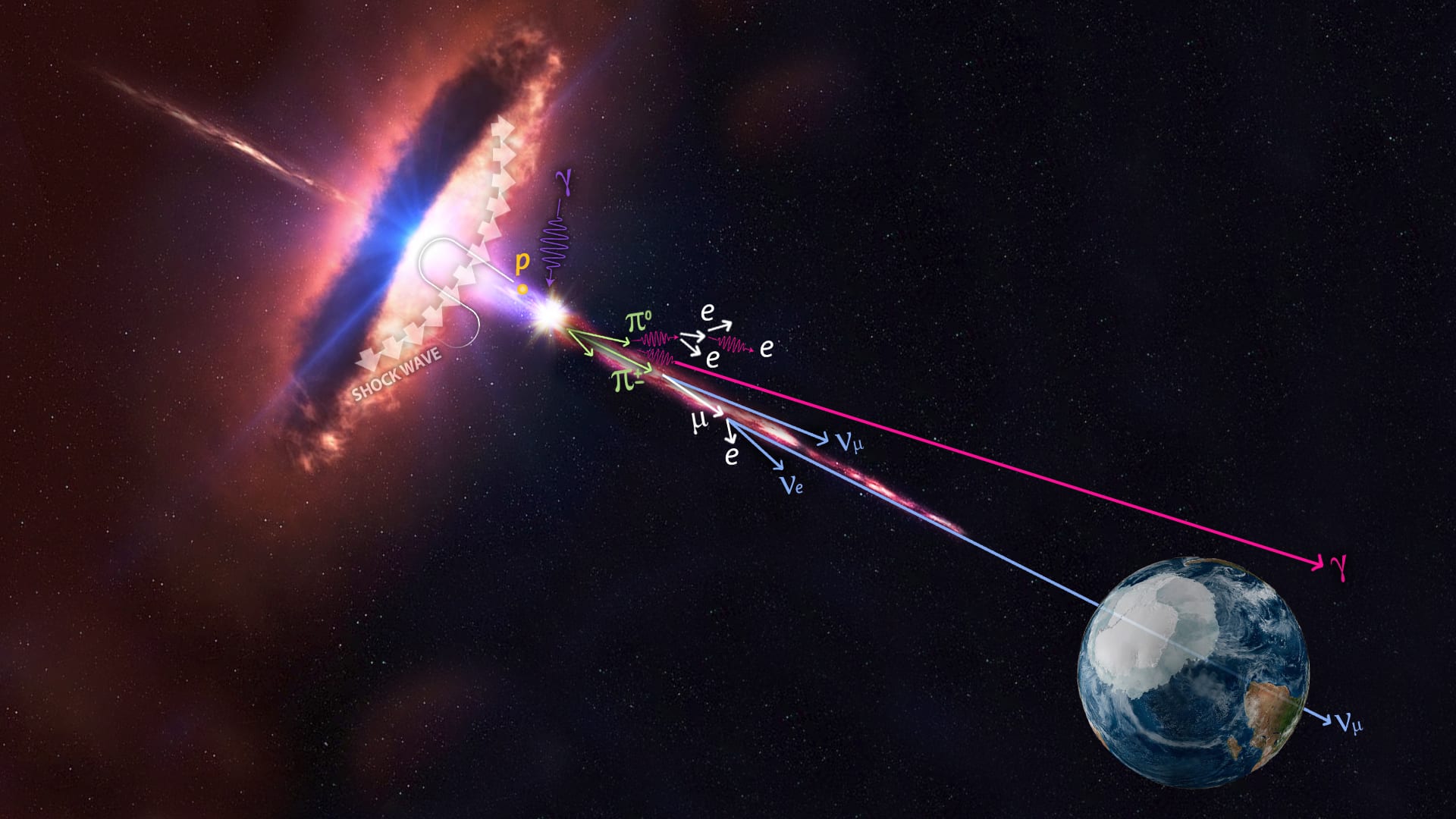
One of the most important achievements of neutrino astronomy was linking a neutrino detected by IceCube in 2017 with the activity of the blazar TXS 0506+056, which was simultaneously observed in gamma rays.
Blazars are a class of active galactic nuclei, whose central regions host supermassive black holes. Relativistic jets – streams of matter moving at speeds close to the speed of light – are launched from their surroundings.
The observations of TXS 0506+056 provided important evidence that blazars may be sources of high-energy neutrinos.
This discovery marks a significant step in the development of multi-messenger astronomy, which combines information carried by electromagnetic radiation, neutrinos and gravitational waves. This approach enables a more complete understanding of the physical processes taking place in the most energetic objects in the Universe.
The subject of this year's Nobel Prize is closely related to the work of the high-energy astrophysics group at the Janusz Gil Institute of Astronomy, University of Zielona Góra.
Dr Gopal Bhatta, who has had the opportunity to collaborate scientifically with this year's laureate, studies active galactic nuclei, blazars, relativistic jets and the mechanisms that accelerate particles to very high energies.
The group also includes PhD students Sangeetha Kizhakkekalam and Navaneeth P. K., who study supermassive black holes and the physical processes in their vicinity. To this end, they use observations from ground-based and space telescopes, analysing electromagnetic radiation across different parts of the spectrum.
This research is part of the broader development of modern high-energy astrophysics, one of whose key goals is to understand the mechanisms responsible for producing radiation and particles of extremely high energies.
The Nobel Prize awarded to Francis Halzen highlights the importance of combining different observational methods in studying the Universe. It is also an opportunity to draw attention to the research carried out at the Institute of Astronomy UZ and its place in contemporary astrophysics.
The Janusz Gil Institute of Astronomy, University of Zielona Góra, extends its warmest congratulations to this year's Nobel laureate in physics.